Culture Is the Cheapest Recruiter You'll Ever Hire

Every organization under staffing pressure makes the same first move.
It pours more energy into recruitment.
More job boards.
More outreach.
More agency spend.
More conferences.
More sourcing.
And when the pipeline still doesn't fill, the conclusion is almost always the same:
"There just aren't enough people."
There usually are.
They're just leaving faster than they can be replaced.
And no recruitment budget can outrun a retention problem.
The Recruitment Trap
This is where many leaders get stuck.
The most visible causes of turnover are often the ones they can't immediately change.
The salary band is fixed.
The funding envelope won't move this year.
The call schedule is constrained by reality.
So leaders focus on the one lever they can't pull and conclude the situation is impossible.
Meanwhile, dozens of smaller levers sit untouched.
That's the mistake.
Because retention is rarely built on one big thing.
It's built on many small things.
And small things compound.
The Small Things Are the System
None of these actions look strategic in isolation.
Fix the parking.
Replace the coffee machine everyone complains about.
Install a shower for staff who bike or run to work.
Protect vacation time.
Respond to emails.
Remove a pointless meeting.
Recognize good work publicly.
Follow through on commitments.
A skeptic might laugh at a retention strategy built around better parking and coffee.
And they'd be right if those things existed alone.
But they don't.
They accumulate.
Nobody resigns because of parking.
People resign because of the accumulated weight of dozens of small signals that tell them they don't matter.
Likewise, people stay because of dozens of small signals that tell them they do.
The individual signal is trivial.
The sum is decisive.
Respect Compounds
You may not be able to change compensation this year.
You may not be able to create more funding.
You may not be able to reduce workload overnight.
But you can almost always improve how people experience a Tuesday afternoon.
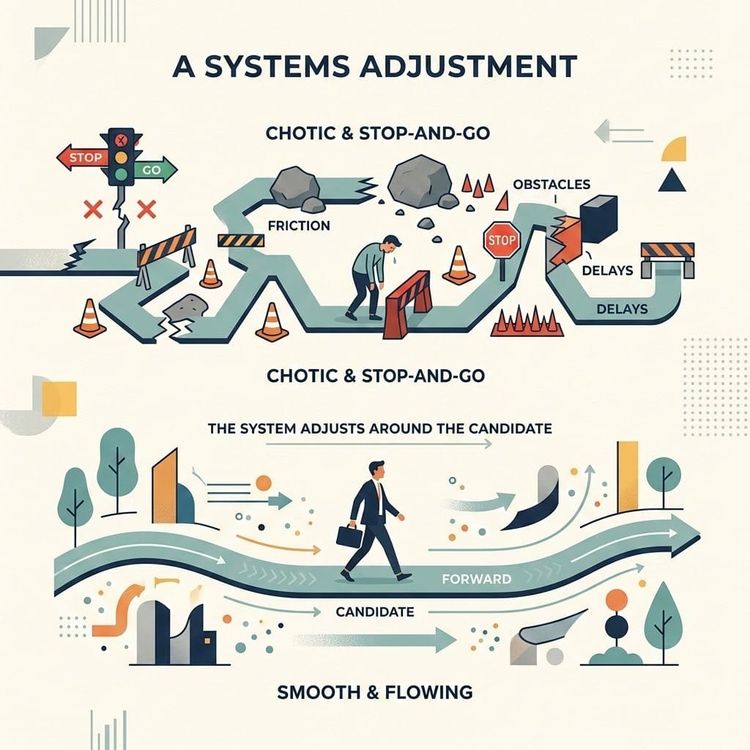
You can reduce friction.
You can increase respect.
You can remove needless frustration.
Over time, those actions compound into something powerful:
Trust.
And trust is one of the strongest retention tools ever created.
Where Retention Becomes Recruitment
This is where the conversation gets interesting.
Most organizations treat retention and recruitment as separate functions.
They aren't.
They are different expressions of the same system.
When culture improves, turnover declines.
Roles stop reopening.
Recruitment pressure falls.
The leak slows.
Then something even more valuable happens.
Your employees begin recruiting for you.
They tell colleagues about their experience.
They answer questions from peers.
They encourage people to apply.
They become a more credible recruiter than any advertisement you could ever buy.
The strongest employer brand isn't built by marketing.
It's built by people who choose to stay.
The Physics of Talent Flow
In every system, flow is determined by resistance.
When leaders face staffing shortages, they often focus on increasing input.
More candidates.
More advertising.
More sourcing.
But flow doesn't improve simply because you pour more into the top of the funnel.
Sometimes the highest-leverage move is reducing the resistance that's causing talent to leave in the first place.
Retention is simply friction reduction applied to the people you already have.
The Timeless Principle
You don't always need to solve the biggest problem.
Sometimes you make the biggest problem matter less by fixing everything around it.
The capacity you're looking for isn't always hiding in the budget.
Often it's hiding in whether your best people still want to be here next year.
Stop recruiting harder.
Start leaking less.
The culture you build is the cheapest, most credible recruiter you'll ever hire.
EXECUTIVE SUMMARY
The Problem: Leaders often respond to staffing shortages by increasing recruitment activity while ignoring the turnover creating the shortage.
The Shift: Instead of focusing exclusively on attracting new people, reduce the friction causing existing people to leave.
The Doctrine: Culture is a recruitment strategy. Small signals of respect, support, and trust compound into retention, reputation, and ultimately a stronger talent pipeline.