Speed Wins Talent. Pressure Loses It.
When roles stay open too long, pressure builds.
Leadership asks for urgency.
Hiring managers want faster shortlists.
Recruiters are told to “move quicker.”
So the system responds the only way it knows how.
It pushes harder.
More follow-ups.
More interviews.
More internal pressure on candidates to decide.
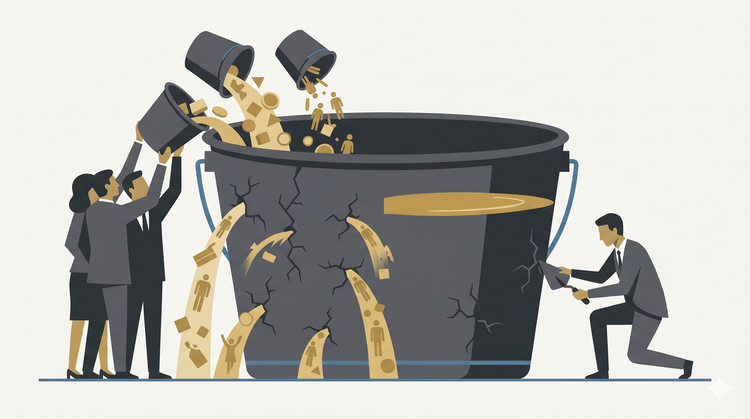
And quietly, something important breaks.
The Mismatch
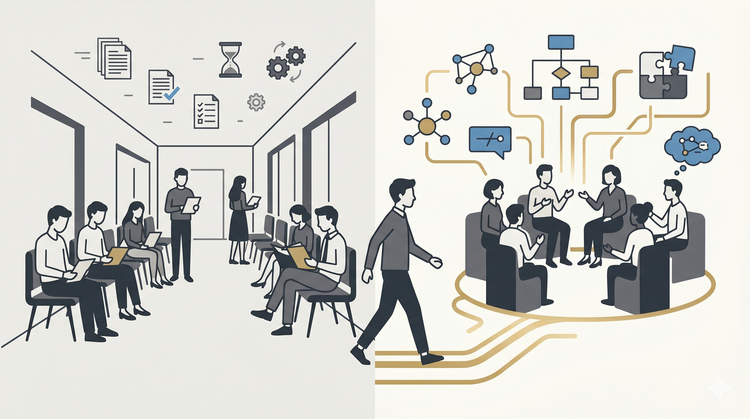
Most organizations operate at one speed.
Candidates don’t.
Especially the ones you actually want to hire.
High-performing clinicians and operators are already employed.
They are not waiting in your pipeline.
They are evaluating you while maintaining their current commitments.
When you force them into your timeline, you create friction.
When friction increases, they disengage.
Not loudly.
Quietly.
The Hidden Cost of Urgency
From the inside, urgency feels necessary.
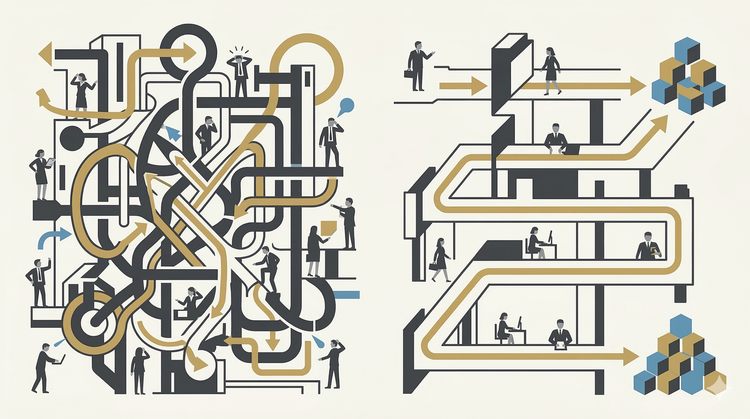
From the outside, it often feels chaotic.
- Interview requests with little notice
- Long gaps followed by sudden pressure to decide
- Multiple stakeholders asking the same questions
- Offers that arrive before clarity
This isn’t speed.
It’s inconsistency.
And inconsistency erodes trust faster than a slow process ever could.
The Architecture Shift
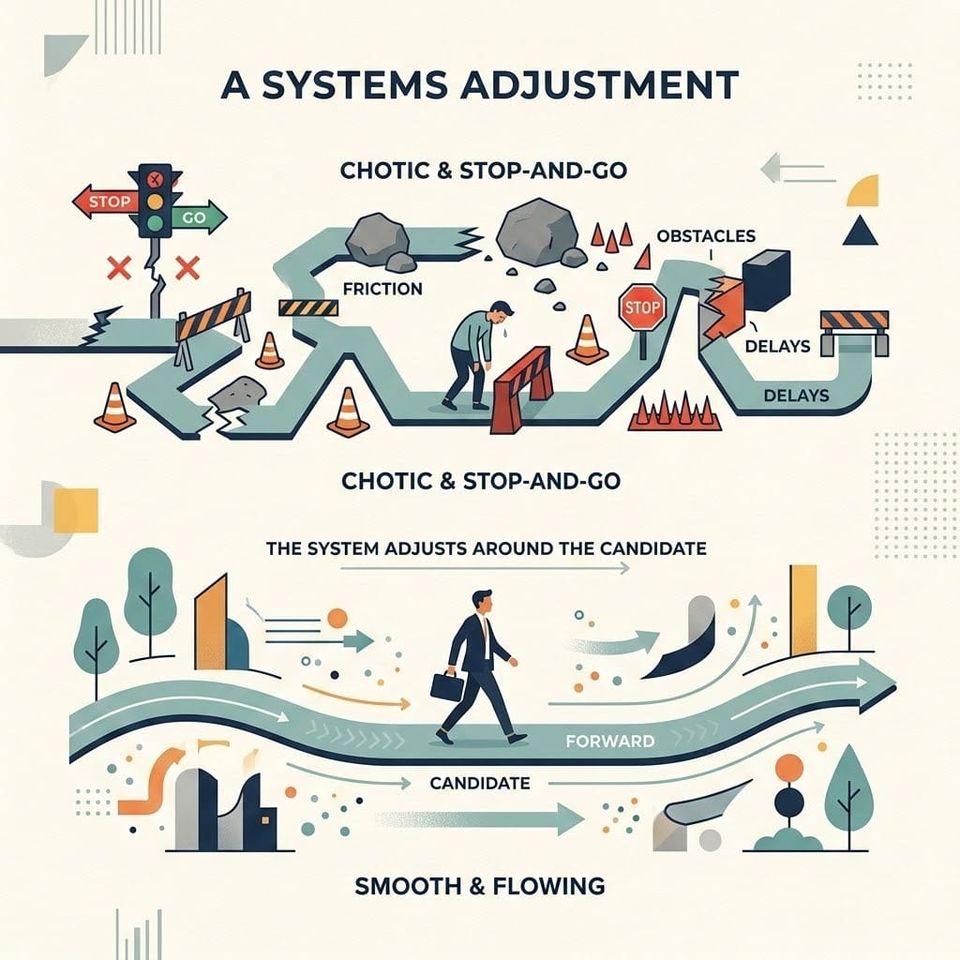
In high-pressure environments, the instinct is to accelerate the candidate.
The better move is to stabilize the system.
Instead of asking:
“How do we make candidates move faster?”
Ask:
“How do we move at the candidate’s speed without losing momentum?”
That shift changes the design of the entire process.
1. Create a Predictable Tempo
Candidates don’t need speed.
They need certainty.
Clear timelines.
Defined next steps.
Consistent communication.
When candidates understand the rhythm, they can engage more confidently.
Predictability feels like professionalism.
2. Remove Decision Friction
Most delays are not candidate-driven.
They are internal.
Unaligned stakeholders.
Slow feedback loops.
Unclear ownership.
When internal decisions are slow, organizations compensate by pressuring candidates later.
Fix the internal speed, and the external pressure disappears.
3. Build Momentum, Not Urgency
Momentum comes from continuity.
Each interaction should move the conversation forward.
No resets.
No repeated questions.
No unnecessary steps.
When momentum is preserved, candidates move naturally.
No pressure required.
The Compounding Advantage
When you align to candidate speed:
- Acceptance rates increase
- Drop-off decreases
- Time-to-fill improves naturally
- Your reputation strengthens in the market
Candidates talk.
They remember which organizations felt coordinated and respectful of their time.
That becomes your edge.
The Executive Lens
Under pressure, most organizations try to force outcomes.
Strong systems remove resistance instead.
If your hiring process feels slow, the answer is rarely more urgency.
It’s better alignment.
Because the best candidates don’t respond to pressure.
They respond to clarity, consistency, and trust.
Design for that, and speed follows.
EXECUTIVE SUMMARY
The Problem
Organizations try to accelerate hiring by pressuring candidates, creating friction and disengagement.
The Shift
Align recruitment processes to candidate speed by improving internal coordination and consistency.
The Doctrine
Asymmetric Recruiting favors momentum over urgency. Systems that reduce friction attract and convert better talent.