AI Didn’t Kill Entry-Level Jobs. It Killed the Waiting Room.
For decades, the implicit deal in knowledge work looked like this:
Do repetitive work for three to five years.
Clean decks.
Manage calendars.
Review documents.
Move information between systems.
Prove you are reliable.
Then, eventually, you earn access to the real work:
- Client problems
- Strategic decisions
- Ambiguous situations with no obvious answer
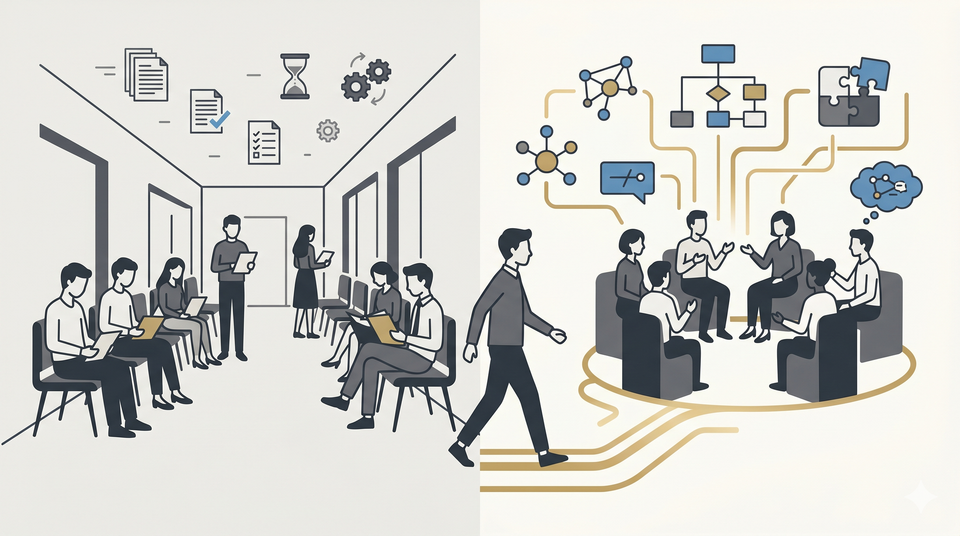
That was the traditional apprenticeship model.
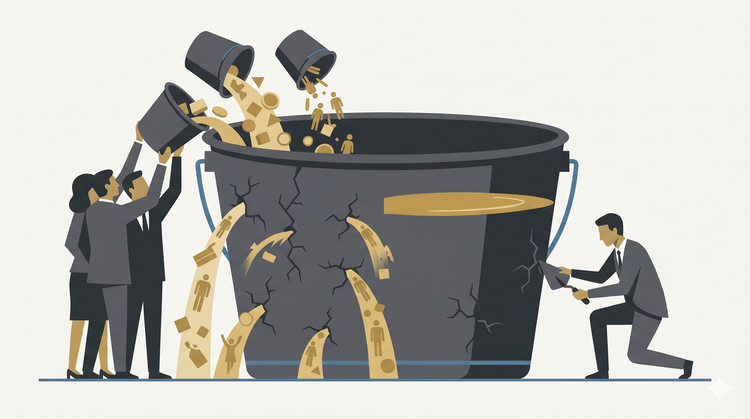
But if we are honest, much of that “entry-level experience” was never actually the work.
It was the waiting room.
AI Changed the Entry Point
AI is collapsing that model.
Not because experience no longer matters.
Because the low-value execution layer that used to gatekeep knowledge work is disappearing.
A motivated 23-year-old with AI can now:
- Learn a domain dramatically faster
- Analyze industries quickly
- Produce competent first drafts
- Understand frameworks that once took years to access
The knowledge gap is shrinking.
But another gap still matters enormously.
The judgment gap.
The Real Moat Was Never Information
Senior operators were never valuable because they could summarize information faster.
They were valuable because they understood:
- What problem the client was actually trying to solve
- Which solution the organization could realistically absorb
- When to push an idea
- When to let it sit
- Which risks mattered politically, not just operationally
That is pattern recognition.
And pattern recognition still compounds through experience.
AI can accelerate learning.
It cannot accelerate trust.
What Changes for Early Career Talent
The strongest younger professionals I meet today behave differently.
They do not arrive asking:
“What tasks can I help with?”
They arrive saying:
“Here’s the problem I’ve been thinking about.”
That changes the conversation immediately.
Because useful thinking compounds faster than task execution ever did.
The New Entry-Level Work
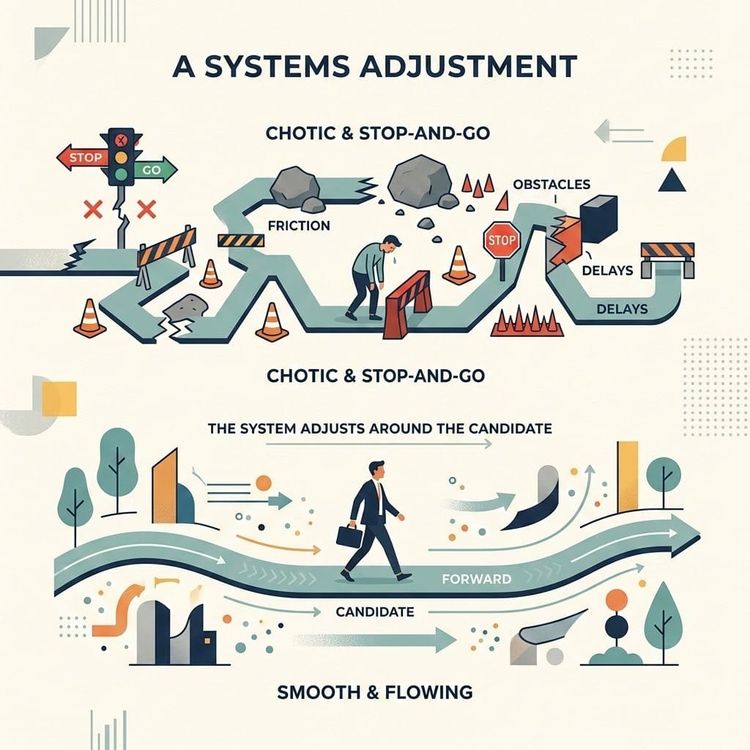
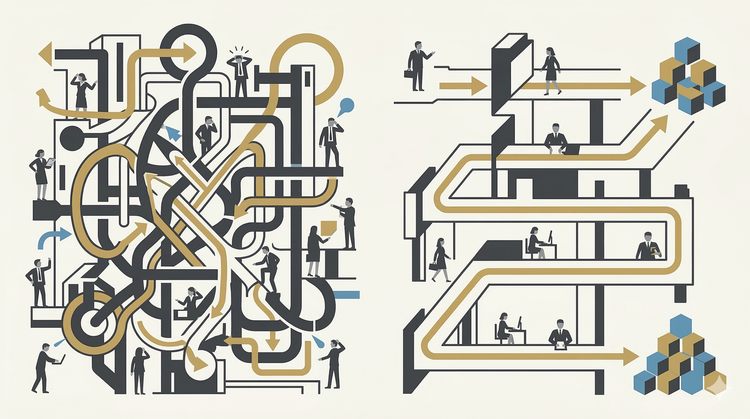
The old model rewarded endurance.
Survive enough repetitive work and eventually you gained context.
The new model rewards comprehension.
Can you:
- Understand a business problem quickly?
- Ask intelligent questions?
- Synthesize information into insight?
- Add signal instead of noise?
That is now the entry point.
In some ways, this system is harsher.
There is less room to hide behind process.
Less time spent quietly absorbing context through repetition.
Less value in simply “being busy.”
But it is also more honest.
The Executive Implication
Organizations that continue treating junior talent as administrative overflow will fall behind.
The leverage of AI means younger employees can contribute strategically earlier than ever before — if the organization knows how to use them.
The bottleneck is no longer access to information.
It is access to meaningful problems.
The smartest companies will not ask:
“How do we automate junior work?”
They will ask:
“How do we accelerate judgment?”
That is the real competitive advantage now.
The Advice I’d Give Someone Early in Their Career
Stop obsessing over job titles.
Find the real problems senior people in your industry are trying to solve.
Use AI to compress the learning curve fast enough that you can contribute thoughtfully to those conversations.
Not perfectly.
Thoughtfully.
Because the new entry-level work is no longer task execution.
It is problem comprehension.
And the people who learn that early will compound faster than everyone else.
EXECUTIVE SUMMARY
The Problem
Traditional entry-level work relied on repetitive tasks as a gateway to strategic exposure.
The Shift
AI is removing low-value execution work and accelerating access to knowledge.
The Doctrine
The new entry-level advantage is not task completion. It is rapid problem comprehension, judgment development, and thoughtful contribution.