
The Feedback Loop
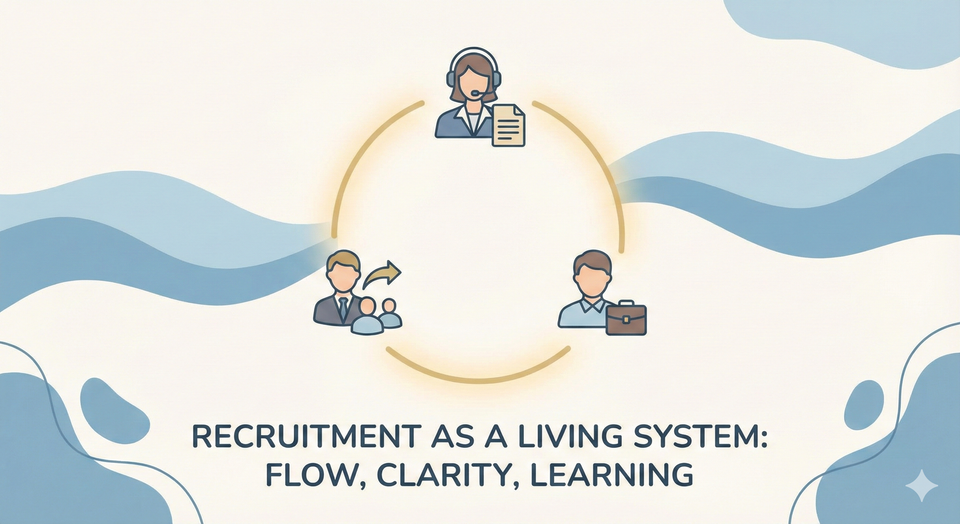
The Quiet Engine of Continuous Recruitment Excellence
Recruitment isn’t a straight line. It’s a loop.
And how well you close that loop determines whether your system compounds or corrodes.
When feedback flows: between recruiters, hiring leaders, and candidates everything improves.
When it doesn’t, frustration festers.
The irony? Most teams treat feedback like a “nice-to-have” rather than the operational backbone of great recruitment.
Where Feedback Breaks Down
Most hiring processes lose momentum in three quiet places:
1. The Post-Interview Void
A candidate finishes their interviews and hears nothing for days.
By the time feedback arrives, they’ve already moved on.
Silence doesn’t just lose candidates; it damages reputation.
2. The Hiring Leader Disconnect
Recruiters send candidates forward without closing the loop on what worked (or didn’t) in the last round.
Hiring leaders end up repeating vague instructions, and the process drifts off-course.
3. The Recruiter Blind Spot
After a hire is made, few recruiters ever hear how that person performs six months later.
That’s the missing data that could refine their future searches and sharpen their instincts.
The Asymmetric Advantage
You don’t need a massive system overhaul to fix this.
You just need a ritual: build feedback into the rhythm of recruitment.
After every search, ask three simple questions:
- What did we learn about the market?
- What did we learn about the process?
- What would we do differently next time?
Those small reflections compound.
They quietly turn recruiting from a reactive task into an adaptive system that learns faster than everyone else.
The Ripple Effect
When feedback becomes cultural, trust deepens.
Hiring leaders feel heard.
Candidates feel respected.
Recruiters become sharper, faster, and more aligned.
It’s not glamorous work: but it’s the work that endures.
Recruitment excellence isn’t built on big gestures.
It’s built on small, repeated acts of clarity.
And the feedback loop is where that clarity begins.
Executive Summary
The Problem: Most recruitment systems lose momentum because feedback isn’t built into the process: it’s an afterthought.
The Shift: Treat feedback as the engine of continuous improvement, not a postscript.
The Doctrine: In Asymmetric Recruiting, small, consistent feedback loops compound into major performance gains across the entire hiring ecosystem.