THE EFFICIENCY BLOC
How coordination turns competitors into a market force
Most organizations believe their talent problem is external.
Not enough people.
Too much competition.
A tight market.
That story is comforting and usually wrong.
What I learned early, working in some of the most resource-constrained systems in North America, is this:
Talent scarcity is rarely the root problem.
Fragmentation is.
The Zero-Sum Illusion
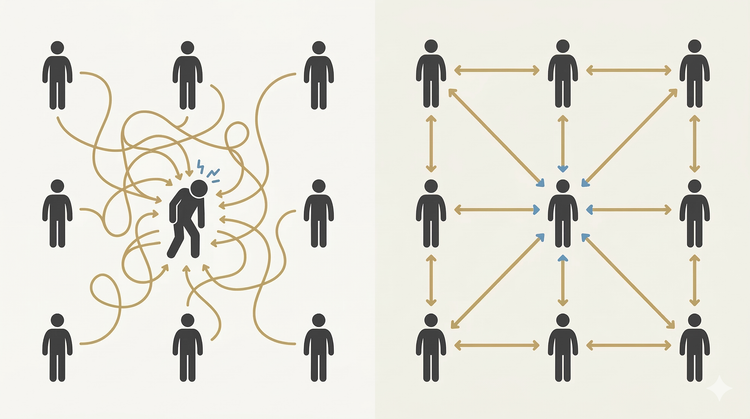
In Northwestern Ontario, fourteen communities believed they were locked in a zero-sum competition for physicians.
If Town A hired a doctor, Town B lost one.
If a candidate said “no,” the lead was dead.
Every site optimized locally and weakened the system globally. We created a Cannibalization Loop.
The result was predictable:
- Duplicate marketing spend
- Endless re-credentialing
- Lost candidates drifting back to major cities
- Rising acquisition costs with declining coverage
Everyone was working hard.
The system was working against them.
The Insight Boards Care About
The breakthrough came when we stopped asking, “How do we compete better?” and asked a different question:
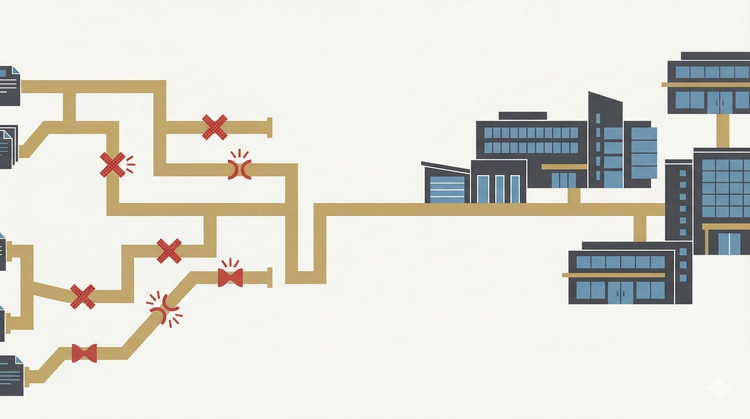
“Where are we leaking value?”
Physicians aren’t interchangeable units.
Some want fly-in rotations.
Some want rural hubs.
Some want progression paths, not permanence.
The market wasn’t small.
It was misrouted.
That reframing changed everything.
The Build: The Efficiency Bloc
We didn’t merge communities.
We merged infrastructure.
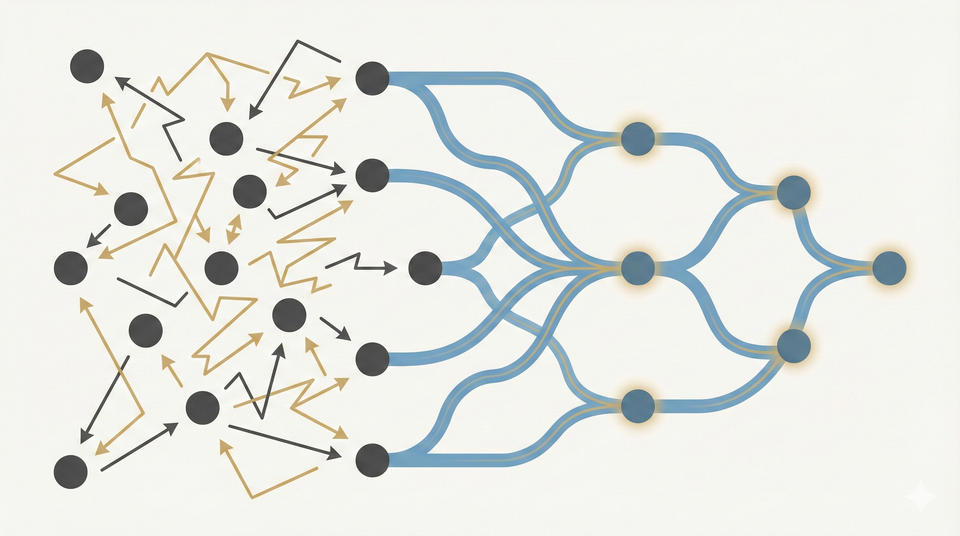
What we built was a cooperative operating layer, first via NOHRA, then operationalized as OPRA, designed to keep talent inside the ecosystem.
Three architectural moves mattered most:
1. Asset Recycling (The "Yes, And" Protocol)
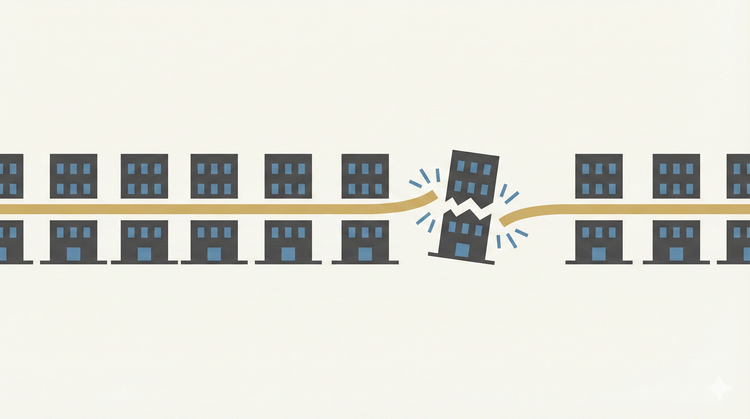
If a physician wasn’t a fit for one site, the lead wasn’t killed.
It was handed to the next best match in the network.
“No” stopped meaning exit.
It started meaning reroute.
Result: We monetized the rejection.
2. Centralized Back Office
Credential once.
Travel once.
Onboard once.
Doctors moved between sites without friction.
Administrative drag dropped.
Utilization increased.
Result: Utilization rates spiked because administrative drag dropped.
3. Collective Leverage
Fourteen small buyers became one serious market voice.
We pooled budgets.
Dominated conferences.
Influenced medical school pipelines and government policy.
Fourteen whispers became one signal.
Result: We lowered the Cost of Acquisition (CAC) for every node in the network.
The Result (The Part Boards Remember)
- Lower cost of acquisition across every site
- Higher lifetime value of every candidate entering the funnel
- Zero dependency on agencies
- A regional system that became the easiest place to work
The model worked so well it didn’t stay local.
It scaled provincially and became embedded in OPRA, where it still operates today.
That is the proof of concept: Flow follows the path of least resistance.
I realized that:
This isn’t recruitment. This is arbitrage.
What we built was not a hiring program.
It was an operational merger without the legal paperwork.
And this pattern applies far beyond healthcare.
The Lesson
If you run a distributed network (dental clinics, retail locations, dealerships, franchises, investment managers) ask yourself:
- When a customer, candidate, or lead says “no” to one unit, do they leave your system?
- Or does your network catch and reroute that value?
Competition fragments leverage.
Coordination compounds it.
The margin isn’t in working harder.
It’s in designing systems that stop value from leaking in the first place.
That’s what system architects do.
EXECUTIVE SUMMARY
The Problem
Distributed networks operate as isolated competitors, leaking talent, leads, and leverage at every handoff.
The Shift
Replace zero-sum competition with coordinated infrastructure that routes assets to their best fit inside the system.
The Doctrine
Asymmetric advantage comes from coordination, not conquest. Systems that recycle value outperform those that fight for scraps.